Why ride Israel?
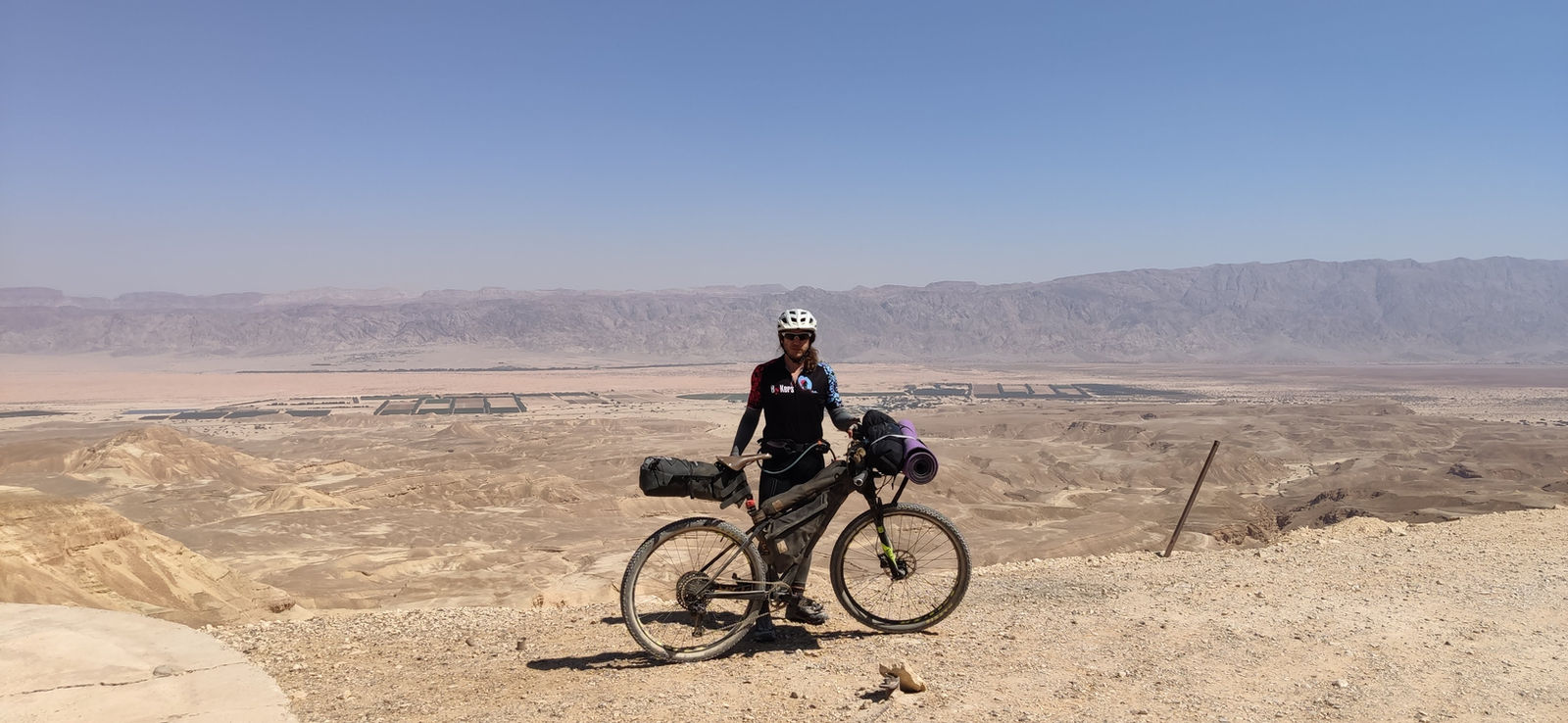
Israel is only about 470 km from north to south, yet few places pack so much into so little. In a single trip you can climb through the green hills of the Galilee, drop to the shores of the Dead Sea more than 400 m below sea level, and cross the huge craters and canyons of the Negev, a desert that covers more than half the country.
Between them are thousands of years of history, from ancient cities to Nabataean spice-route forts, and a remarkable mix of people: Jews, Muslim and Christian Arabs, Druze, Bedouin and Circassians, often living just a few kilometres apart. Most of it is linked by dirt roads and singletrack, with a village, a petrol station or a trail angel never too far away.
Bikepacking here is very safe, and almost everyone will smile and help when needed. There are still a few things worth knowing, and you'll find them all below.
Three regions, three worlds
Golan and Galilee
Green hills, basalt plateaus, streams and the Sea of Galilee. Short, steep climbs, Druze villages and the best food on the trail.
Best: autumn to spring. Wet in winter.Coast and Judean hills
The Mediterranean coast, pine forests and the climb to Jerusalem. Busier and greener, with plenty of places to eat and sleep.
Best: October to May.Negev and Arava
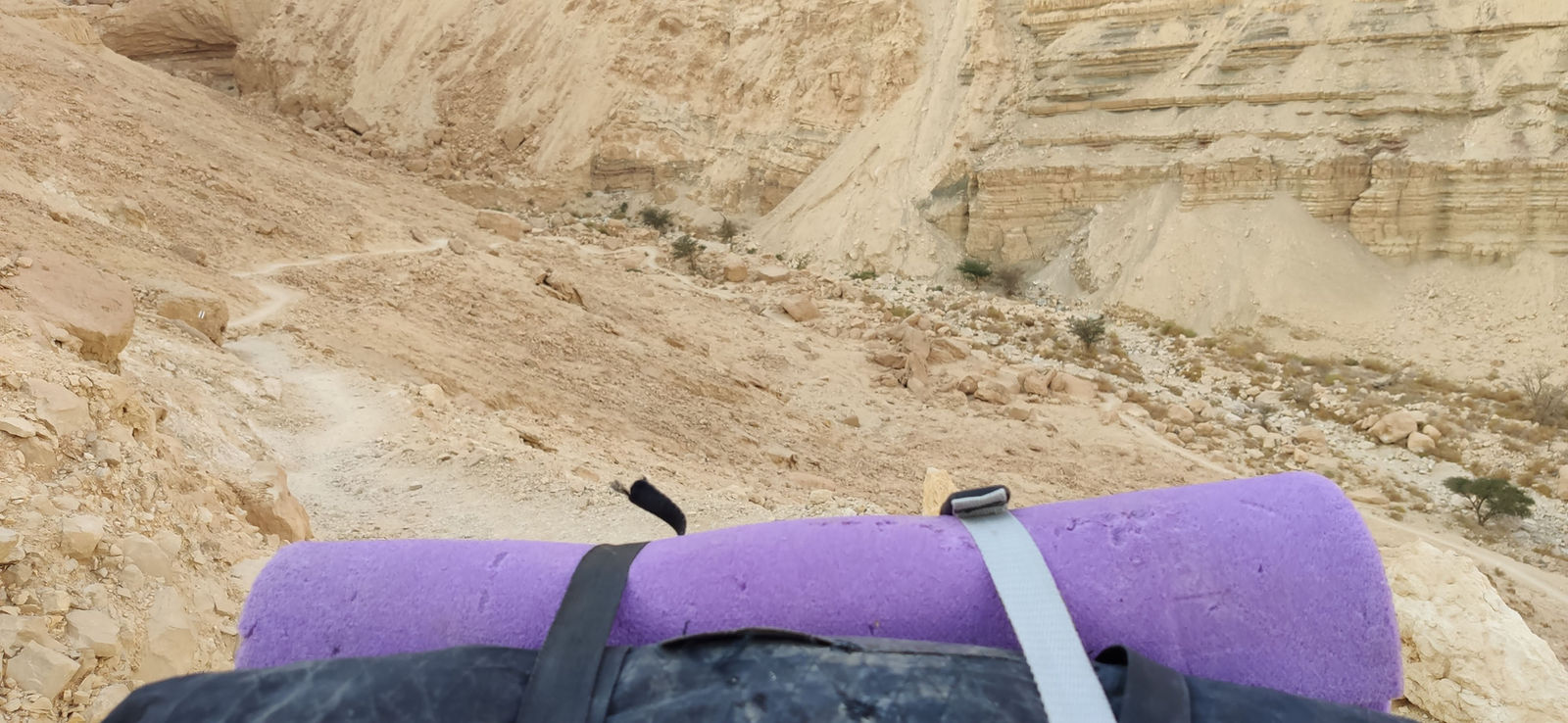
Huge craters, canyons and open desert all the way to the Red Sea. Long distances between water points and the region's best night skies.
Best: November to March. Too hot in summer.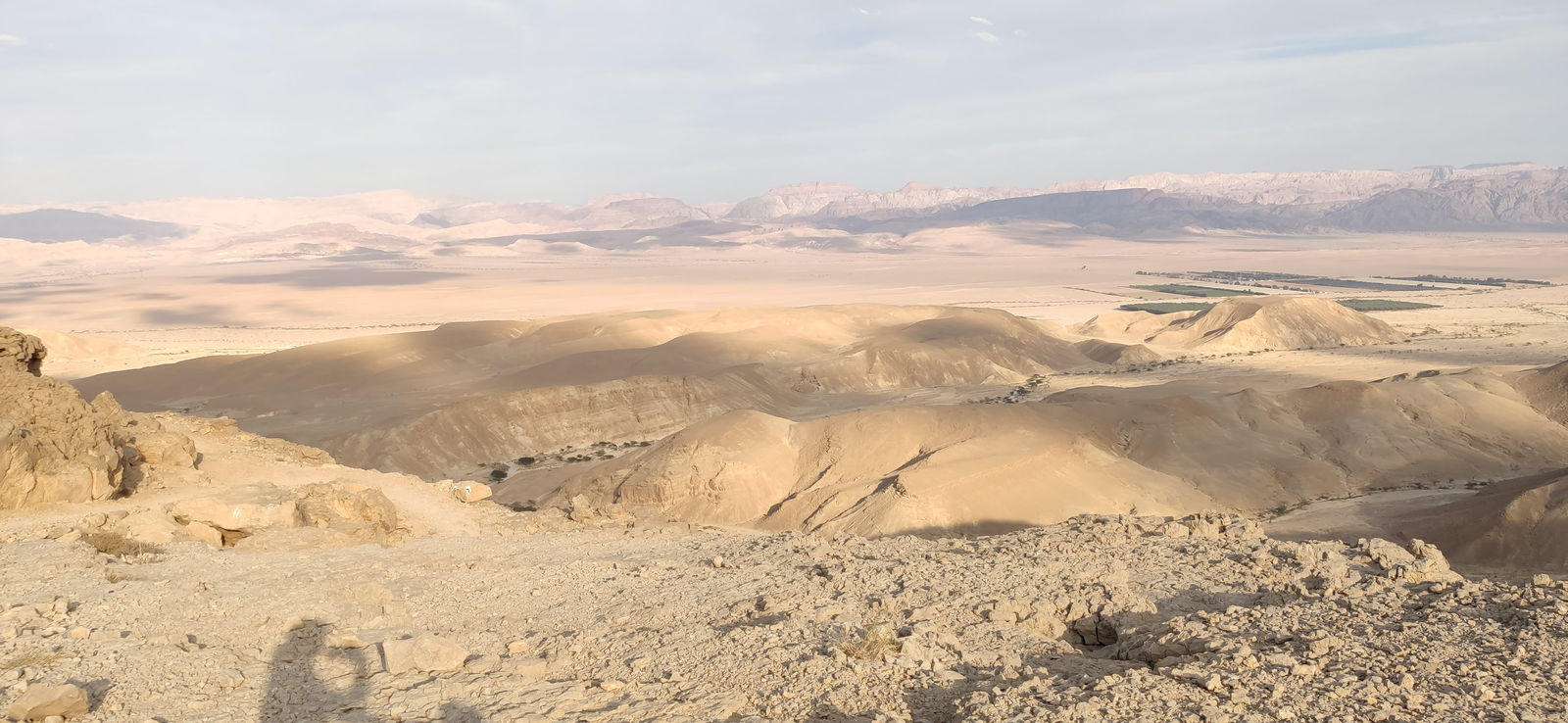
Good to know
Before you come
Entry and visa
Most visitors from Europe, North America and Australia don’t need a visa, but must apply online for an ETA-IL travel authorisation before flying. Rules change, so check the official requirements for your passport well before your trip.
Your passport must be valid for at least 6 months from your arrival date.
Flying with your bike
Most riders fly into Ben Gurion Airport (TLV) near Tel Aviv; a few flights land at Ramon Airport near Eilat, right at the start of the desert.
Pack the bike in a box or bag, let some air out of the tyres, and book the bike with your airline in advance. Keep the box or leave it with a trail angel if you fly home from the same airport.
From the airport
There is a train station inside Ben Gurion Airport, with trains to Tel Aviv, Jerusalem and Haifa. Bikes are allowed outside rush hour, so it’s the easiest way to start riding.
Taxis with room for a bike box are also easy to find; agree on the price or ask for the meter.
Travel insurance
Get insurance that covers cycling and outdoor activity, including evacuation and rescue. Healthcare in Israel is excellent but expensive for tourists.
Money, phone and power
Money
The currency is the shekel (₪, ILS). Cards are accepted almost everywhere, including small shops and petrol stations. Carry a little cash for villages and campgrounds.
ATMs are easy to find in every town. In restaurants a tip of 10–15% is expected.
SIM and eSIM
A local SIM or eSIM with plenty of data is cheap and easy to buy at the airport or online. You’ll want data for maps, weather and the community groups.
Power
230 V, with type H (Israeli) and type C (European) sockets. Most modern plugs from Europe fit; bring an adapter just in case.
Petrol stations and cafés will usually let you charge; ask politely.
Weather and water
Heat
From May to October the desert can pass 40°C. Ride early, rest in the shade at midday and finish before dark.
A hot, dry desert wind called a sharav (or hamsin) can raise temperatures fast. Check the forecast every day.
Water
Tap water is safe to drink everywhere. In the desert plan for 6–8 litres a day and know where your next water point is.
Water points on the trail →Flash floods
In winter, rain far away can send a flood down a dry desert riverbed within minutes. Never camp in a wadi bed, and don’t enter canyons when rain is forecast.
Culture and security
A mosaic of communities
Few places mix so many cultures in so little space, and you’ll ride through most of them. Jewish cities and kibbutzim, Muslim and Christian Arab towns, Druze villages on the Carmel and in the Golan, Bedouin communities in the Negev and the Galilee, and even two Circassian villages, Kfar Kama and Rehaniya, whose people came from the Caucasus in the 19th century.
Each has its own food, festivals, rhythm of the week and famous hospitality. A stop for coffee in a Druze village or tea in a Bedouin tent is often a highlight of the trip.
The weekly day of rest changes too: Friday for Muslims, Saturday for Jews and Sunday for Christians, so something is almost always open somewhere nearby.
Shabbat
From Friday afternoon to Saturday evening most shops close and public transport stops, especially in Jewish areas. In Arab and Druze towns, and in big cities like Tel Aviv, many places stay open.
Plan your food and transport for the weekend in advance.
Respect
In religious neighbourhoods and holy sites, including Jerusalem’s Old City, cover your shoulders and knees. People are warm and direct; don’t be surprised if strangers offer coffee, food or advice.
Security situation
Check your government’s travel advice before you come and follow the news while riding.
Install the Home Front Command app. It gives alerts for your area and tells you what to do and where the nearest shelter is.
Where not to ride
Red signs at the entrance to some areas of the West Bank mark places Israelis may not enter. Don’t ride past them. The routes on this site avoid these areas.
Safety and rules
Theft
Always stay near your bike, especially in Tel Aviv but in other cities too.
If you need to go into a shop, try to bring your bike inside. Trust us on this.
Military training zones
Some routes pass through military training zones and can only be ridden on weekends (Friday and Saturday). Most are in the desert, some in the Golan Heights.
Ask in our Telegram community and we’ll help.
Ask on Telegram →Paved roads
You can’t ride on highways. Other roads are fine, but use them only when there’s no alternative and stay as far from the yellow line as you can.
A few roads are closed to all cars and bikes, road 10 for example. Check with the community before you set off.
Desert and unpaved trails
Some trails are marked for walking only, usually with a sign, especially in the desert. As far as we know, GPX files from this site avoid them.
Night riding in the desert
In most of the desert, including the Negev, the Arava and the Judean Desert, you may not ride between sunset and sunrise. Much of it is nature reserve, and at night it belongs to the animals: ibex, gazelles and hyenas come out to drink and feed.
Plan each day so you reach your campsite before dark, and ride on only at first light. You can arrive at a designated campsite and sleep there, but don’t keep riding after dark.
In the north and centre, night riding is usually allowed outside nature reserves. Not sure about a section? Ask the community.
Ask on Telegram →SOS
If you need help but don’t need an ambulance, ask the community. For emergencies call 101 for an ambulance or 100 for the police.
Emergency numbers →Getting around
Transportation
Trains cover the big cities and some smaller towns. Most have a bike carriage (look for the sign on the door) at no extra cost, but bikes are only allowed 9am–3pm and 7pm–6am.
Buses are usually the better option. Any bus with a luggage hold can carry 5 bikes; if a driver refuses, tell him it’s the law and ask for his name and licence number.
Buses run almost every hour and day except Friday noon to Saturday evening. Some villages only get a few buses a day.
Mobile reception
Coverage is good, with 3G–4G in most places, but there are gaps, especially in the desert and deep in the woods.
If you need signal fast, climb the nearest high point; that usually gives enough for a call.
What bike should I bring?
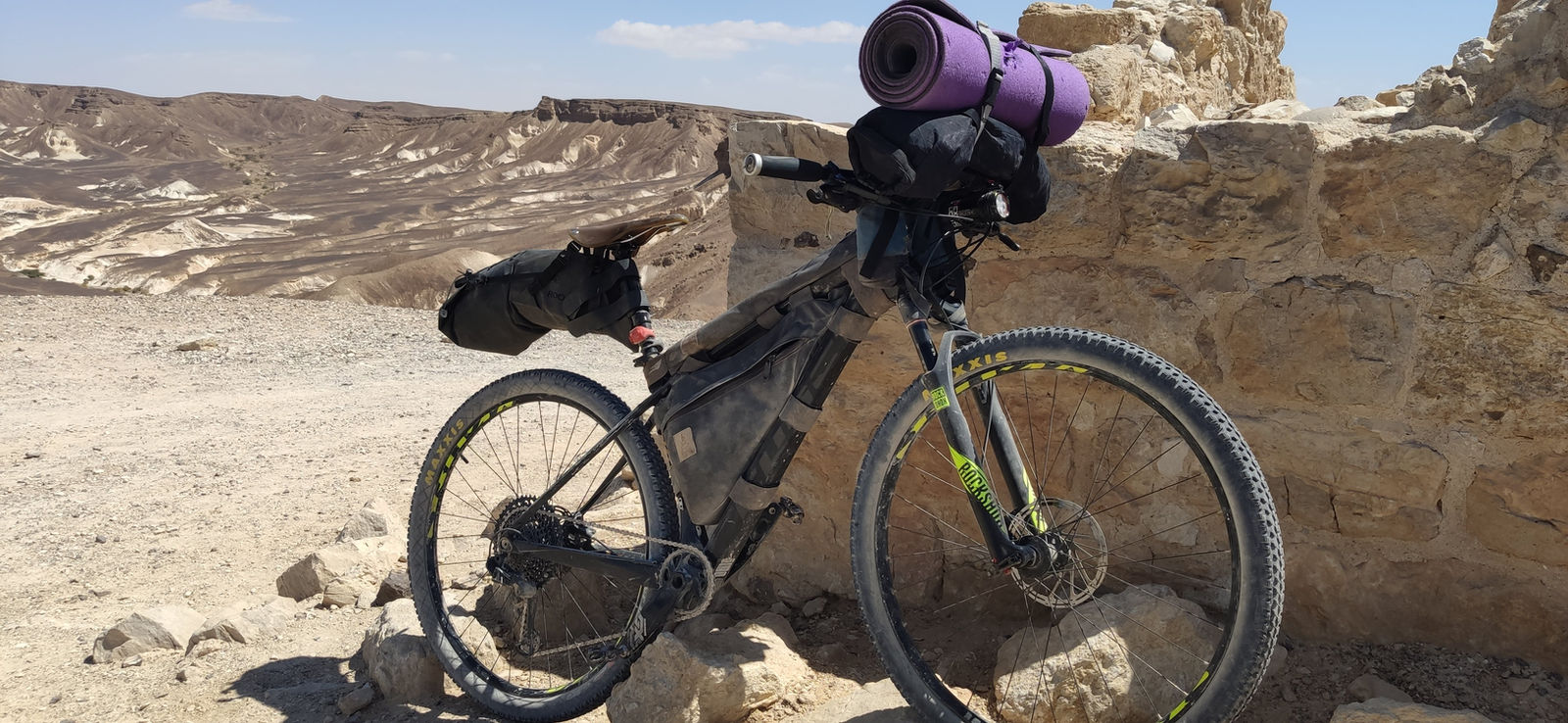
Always a mountain bike in Israel: 2.3–2.4" tyres, tubeless.
Camping and nature
Camping
Camping is allowed in most wooded areas, forests and grassy patches. In the centre and north it can be harder to camp for free, but there’s usually a free campground nearby.
In the desert you may only sleep in designated sites. Mark where you plan to camp and ask the community.
Animals while camping
No, there are no bears in Israel. Most animals are small and harmless.
Snakes may look for a warm spot under your mattress, and small predators will go for your food. If you have a tent, keep the food inside.
Sleeping on the beach
It looks like the perfect spot, but we don’t recommend it, especially if you’re alone. If in doubt, ask the community.
There are also many trail angels who can help and host you.
Trail angels →Food and repairs
Food and drink
Almost every petrol station has a supermarket attached, from small shops to full-size stores. They take cards or shekels and most are open 24/7.
Most villages have a grocery store, but many close at noon, and all close from Friday noon until Sunday morning.
Bike shops
Mountain biking is popular, so every city has a couple of shops. If you need a repair, tell the owner you’re touring; most will start right away.
Shops usually open 9–10am and close at 7pm. On Friday they close at 2–3pm and stay closed until Sunday.
Holidays and special days
Passover
March or April. For a week most stores don’t sell bread. You’ll find matzo, a thin dry cracker, instead.
Yom Kippur
September or October. Much of the country fasts for a full day and stores close from noon until the following evening or even the morning after. Buy food in advance.
Remembrance days
Holocaust Remembrance Day (April): stores close from noon to evening, and in the evening a siren sounds nationwide for 1 minute.
Memorial Day (April or May): the same, with another 2-minute siren in the morning. Stop and stand still while it sounds.
Still have a question?
The community is welcoming and happy to help with tips, gear, or getting to and from your adventure.