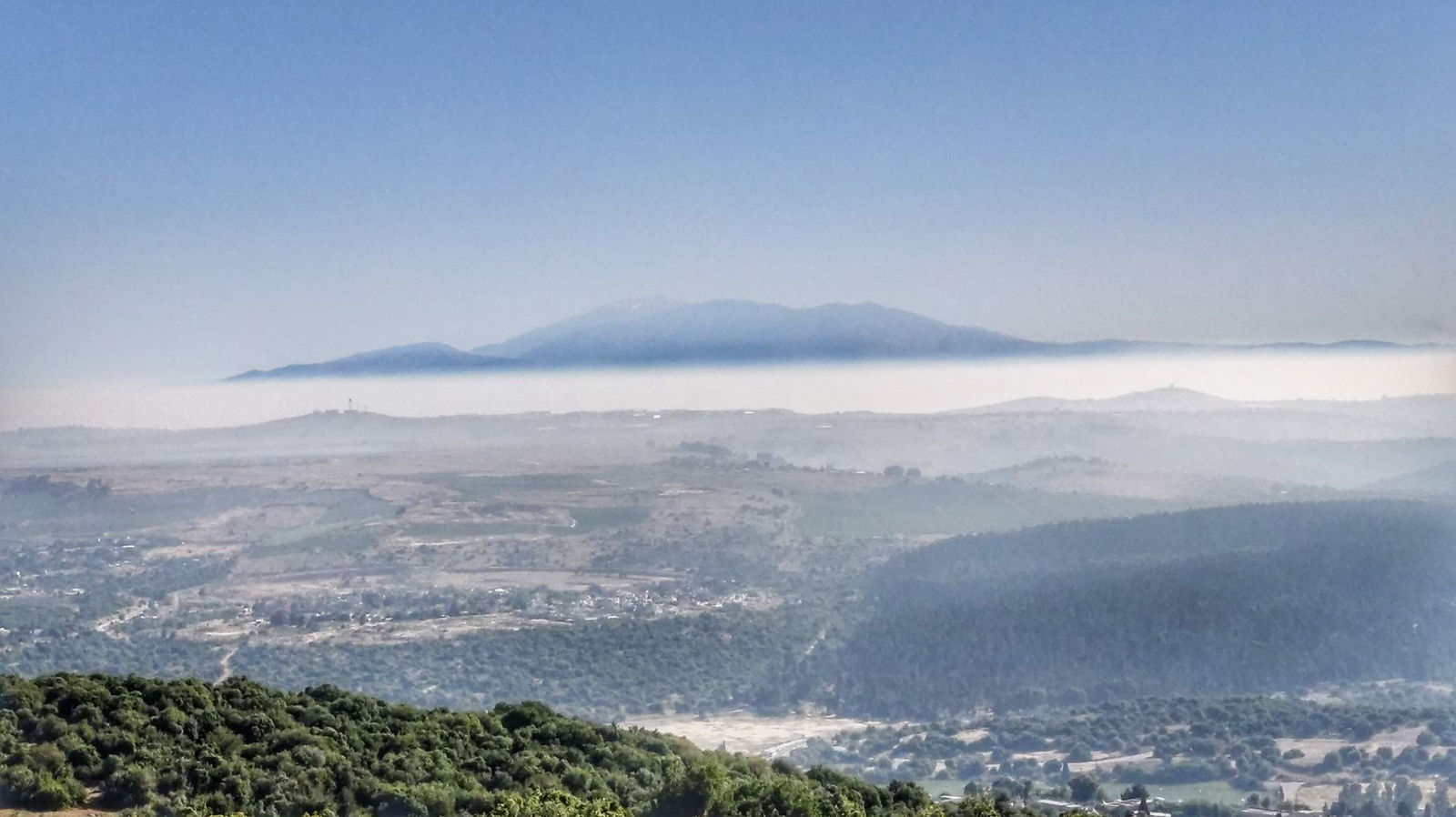
Our community has gathered lots of tips, most from personal experience, so read them before you head out. Here's the first one: however hard the climb, the view is always worth it.
Which route should I choose?
Keep it simple
Your first ride is about testing your gear, seeing if you can sleep outdoors, and enjoying the adventure. Pick a 100–120 km route, around 60 km a day at most. Leave at noon, find a nice spot to sleep and see how it feels.
A familiar route
No surprises: you know where the water is, where to stop for the night and how to split the route. Less navigating, more listening to your bike and body.
If you do pick a new route
Do your homework: where you can bail out, which public transport can cut it short, where the gas stations are. Write it all in a note on your phone.
60 km a day? That's it?
Yes. With all the gear the pace is different, and on rides longer than two days the load on your body builds up. Find a comfortable balance.
How much gear to take?
Gear = weight
There'll be gear-heavy rides later, but right now the goal is to feel what sleeping outside is like and test how the bags attach. No point overloading. Not on this ride.
As light as possible
Don't bring the whole house. Your usual riding kit, a yoga mat and sleeping bag rolled together on the handlebar, a little food, a shirt and shorts for the evening. That's it.
The big backpack from India?
No. A backpack holds a lot, but over the hours it weighs on your shoulders and your seat, and chafing isn't far behind. Put as much as possible on the bike.
I'm freezing at night
A cold night after a hot day can leave you under-equipped. Check temperatures at camp and along the ride, and prefer a good sleeping bag over extra layers.
Water and food
This isn't the time to pack a week of sandwiches. Pack only what you need and camp a few kilometres from a gas station to buy dinner. Don't forget a beer.
Train: the pros
Your bike stays with you, and there are toilets, power outlets and space to stretch. Board only the carriages marked with a bike.
Train: the cons
Bikes are allowed Sunday to Thursday 09:00–15:00 and 19:00–06:00. On Friday they’re allowed at any hour, and on Saturday night and after holidays they’re not allowed. On a busy line expect some looks.
What about buses?
More flexible and goes everywhere, but you'll need to remove a wheel for the luggage hold. If you don't board at the first stop, it may already be full.
Complexity first
Do all the transfers and connections at the start, and at the end, when you are tired, take a single line home with minimal hassle.
Don't skimp on a shuttle
Treat bikepacking like a trip abroad, where you don't count every shekel. Plan the most comfortable way there and back.
What if the riding gets hard?
Tortoises invented bikepacking
It's not a race. Whoever arrives first probably has fewer photos. Slow down and stop at the viewpoints.
Climbs are really hard
The bike is heavy and the climb looks like a wall. It was hard the first times on a bike too, and your body adapts. And you can always get off and walk.
It's all about pace
Listen to your body and heart rate, and find the pace you could hold for hours. It takes time, but it's worth trying.
Bring a friend
With a friend time flies, morale stays high, long climbs feel shorter and you can split the weight of the coffee kit.
I want to try, but it's scary
Of course it is!
But isn't it time to break the routine and try something that always seemed out of reach? Even if it's not for you, you can be proud you tried.
That's what friends are for
Alone, in the woods, at night... it can be scary. Grab a friend for an evening by the fire, a beer and some stories.
What if I can't sleep?
You're allowed to envy those who fall asleep on a rock. If it's hard for you, ask a doctor or try something natural. And warm nights help.
Start simple and close
Start small: a familiar route near home, 3–4 hours each way, maybe that spot you've passed dozens of times and thought would be great for camping.
I bought all the bags. How do I pack?
Air doesn't weigh much
When a bag has free space you'll want to fill it, but most of that ends up unused. With experience you'll learn exactly what you need.
Quick math
Toothpaste, sunscreen, chamois cream, power bank, pump and more all come in mini versions. Dropping 1.5 kg is easy, and the climbs will thank you.
Think of bags as drawers
One bag for camp, one for riding, one for stops. Sleeping bag with night clothes, creams with sandwiches, snacks with lip balm.
Order, please!
First in is last out. The sleeping bag goes in first, the wind jacket last. You don't want to unpack everything to reach a charging cable.
How do you split the route into days?
Plan by hours, not km
60 km on the flat and 60 km in the hills are completely different days. Check the total climbing, and assume an average of about 10–12 km/h off-road with gear.
Water points are anchors
Mark every tap, spring, kibbutz and gas station on the map, and build your days around them. In the desert, this is the first thing you plan.
A short last day
Make the last day shorter. You'll be tired, and you need time to catch transport home.
Always two camp options
Pick a planned camp spot plus a backup a few kilometres earlier, in case the day runs long.
Weather and seasons
Check the forecast for each area
In Israel there can be a 15°C difference between a hill morning and a desert noon. Check the forecast for each point along the route, not just the start.
Summer: start early
In the hot months ride from sunrise, rest in the shade at midday and carry on in the afternoon. Heat is the biggest danger out there.
Winter: flash floods
Distant rain can flood a wadi even under clear skies above you. Follow the warnings, and never cross a flowing channel.
Wind is a silent enemy
A headwind can double your riding time. Check the wind direction and, if you can, plan the route with it.
The night before
Fully charged
GPS, phone, lights and power bank: charge everything fully the night before.
Bike check
Tyre pressure, brakes, a lubed chain and tightened bolts. Better to find a problem at home than on the trail.
Someone knows where you are
Send someone the route file, your camp spots and your expected return time.
A test pack
Load the bags on the bike and ride a short loop near home. Anything that sways or rattles, fix it now.
Don't be shy to ask
The bikepacking community is always happy to help and welcomes new members with open arms.