Suddenly there's no rush to reach camp, and honestly, night riding is the best: everything around you is asleep and only your beam flickering over the hills tells a different story. Even if you don't plan to ride in the dark, be ready with 3–4 hours of light in the evening.
What to know before choosing a light
- 01 Brightness is measured in lumens.
- 02 Don't want to deal with numbers? Count the LEDs on each light.
- 03 A light with 3 or more LEDs should be enough as your main handlebar light.
- 04 Wait for night, find a very dark spot and switch it on. If it lights up 100–150 m ahead, it belongs on your handlebar.
- 05 Get a light with a display showing remaining battery time.
- 06 Don't settle for cheap lights. Better to borrow one from a friend than waste money.
Advanced tips for night riding
- 01 How many lumens? 800–1,500 on the bars off-road, 300–1,000 on the helmet, and a flashing blinker at the back.
- 02 Plan by run time, not brightness: 3–4 hours on medium beats one hour on full.
- 03 The winning combo: a wide flood beam on the bars and a focused spot on the helmet, so you see both the trail and the next turn.
- 04 Drop the power on climbs. At low speed you don't need to see far, and you save battery for the descents.
- 05 Cold shortens battery life. On cold nights keep the light in a bag or pocket until you need it.
- 06 Charge every evening: at camp, plug the light into your power bank even if it seems there's enough left.
- 07 Check the water rating (IPX) and a mount that won't loosen on rough ground.
Component by component
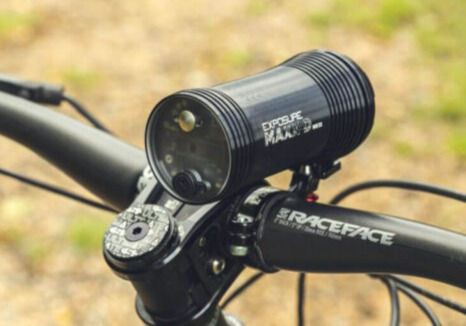
Main handlebar light
The most important light! It lights up the night far ahead and keeps you riding safely. Quality lights manage battery better, but can cost up to ₪2,000.
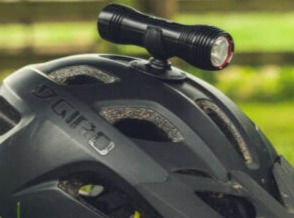
Head lamp
Some riders never leave without one, others skip it. It lights the 'dead' zones beside the trail, helps around camp and doubles as a spare.
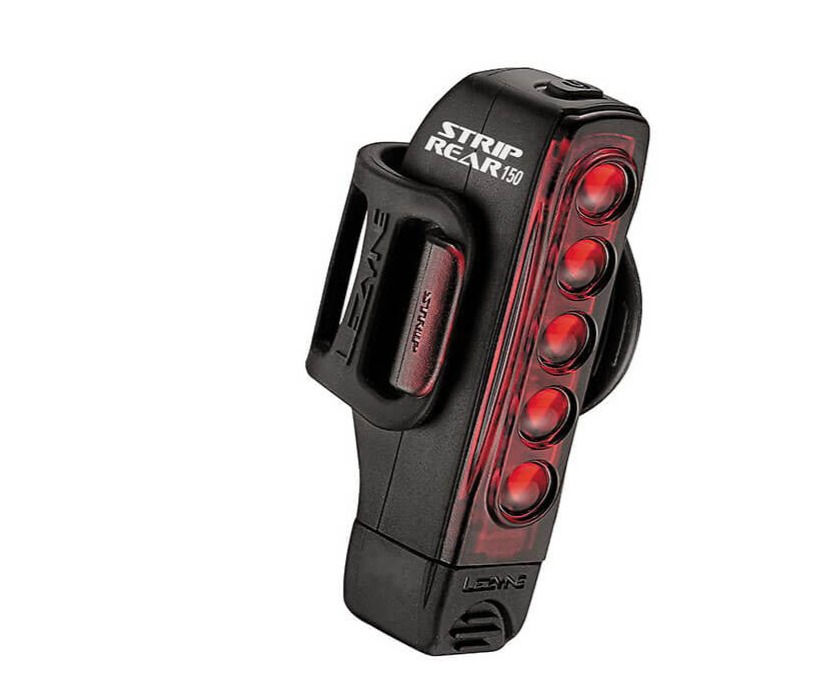
Rear blinker
Just as important: this is the one that gets you home in one piece. Almost every ride touches roads, especially that gas-station stop right before camp.
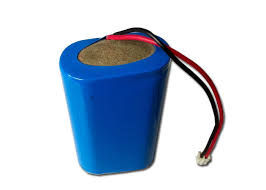
Batteries
Most lights today have a built-in battery, so check you have enough run time for the ride. Lights with external batteries need a special charger on multi-day trips.
Exposure: our favourite light
Exposure Lights is a British company that designs and builds its lights in England, and it's the light most of us ride with. The reason is simple: one light, no cables and no external battery, that lasts a whole night.
The whole light, battery included, is built into a single aluminium body. No cable to snag on singletrack, no battery to strap to the frame, and it moves from bars to helmet in seconds.
The biggest win for bikepacking is the display: it shows how much run time is left in the current mode, so you know exactly whether to drop the power or whether you'll make it to camp.
Community members get 20% off at Trek Israel. Details on the Offers page.
Exposure lights at Trek Israel