Many riders carry only a sleeping bag and pad, so shelter is a kind of bonus. Still, despite the extra weight, there are plenty of reasons to bring one.
Pros and cons
- 01 A tent shields you from whatever the weather does outside.
- 02 Worried about reptiles wandering by at night? A tent is the perfect answer.
- 03 Tents weigh from a few hundred grams up to 1.5 kg, extra weight you don't always need.
- 04 Tents need pitching, and when you're exhausted that's the last thing you want to do.
- 05 Most tents are bulky and hard to fit in your bags.
- 06 Find a photo of the tent packed and plan ahead where it'll go.
- 07 You don't need every accessory. Leave the fly at home on warm nights, or the stakes when camping in a forest.
Types of shelter
Tent
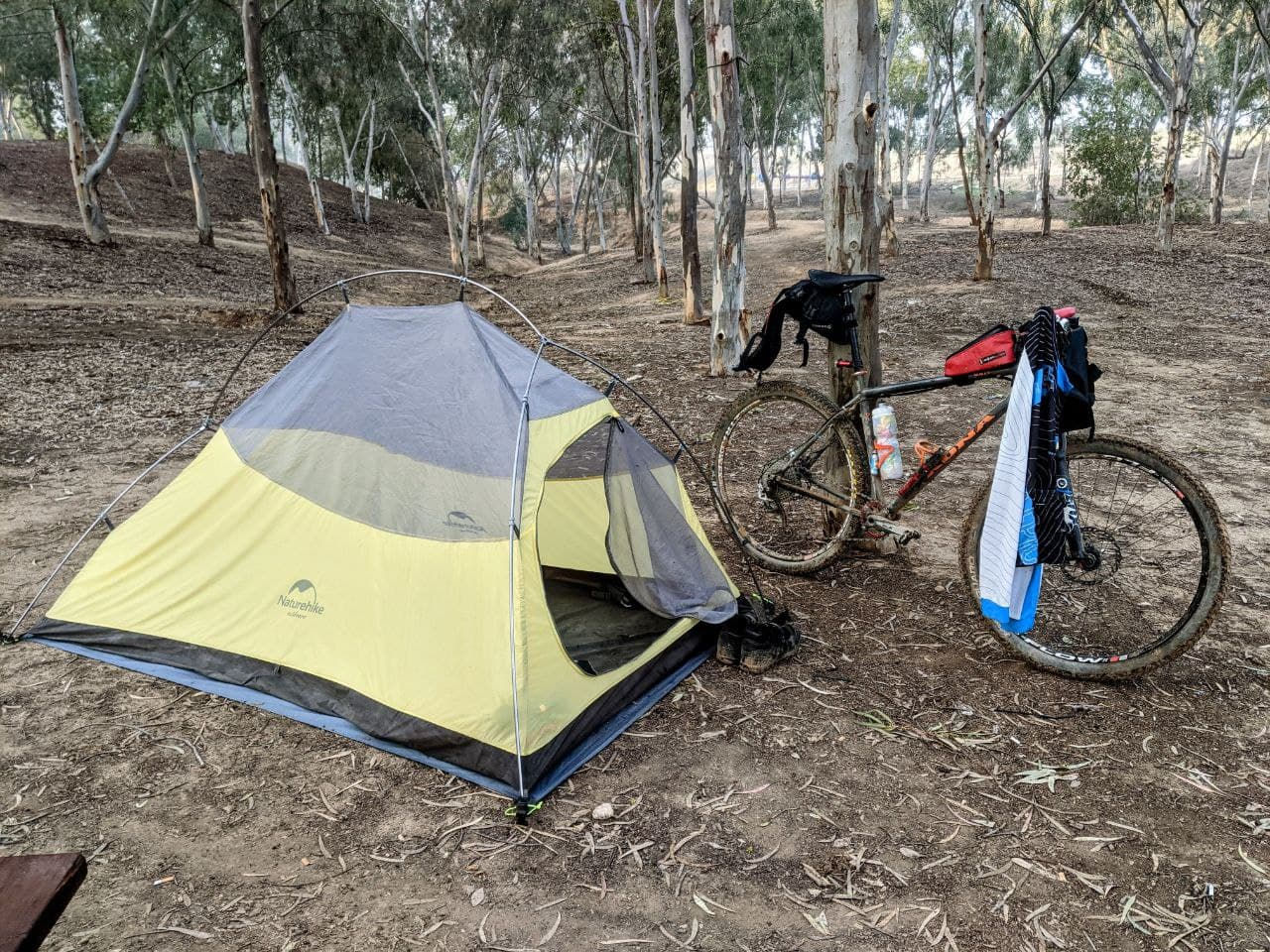
The ideal, with dozens of models, sizes and weights. Check how it opens, its poles, and how it folds and packs. Prices range from hundreds to thousands of shekels.
Tarp
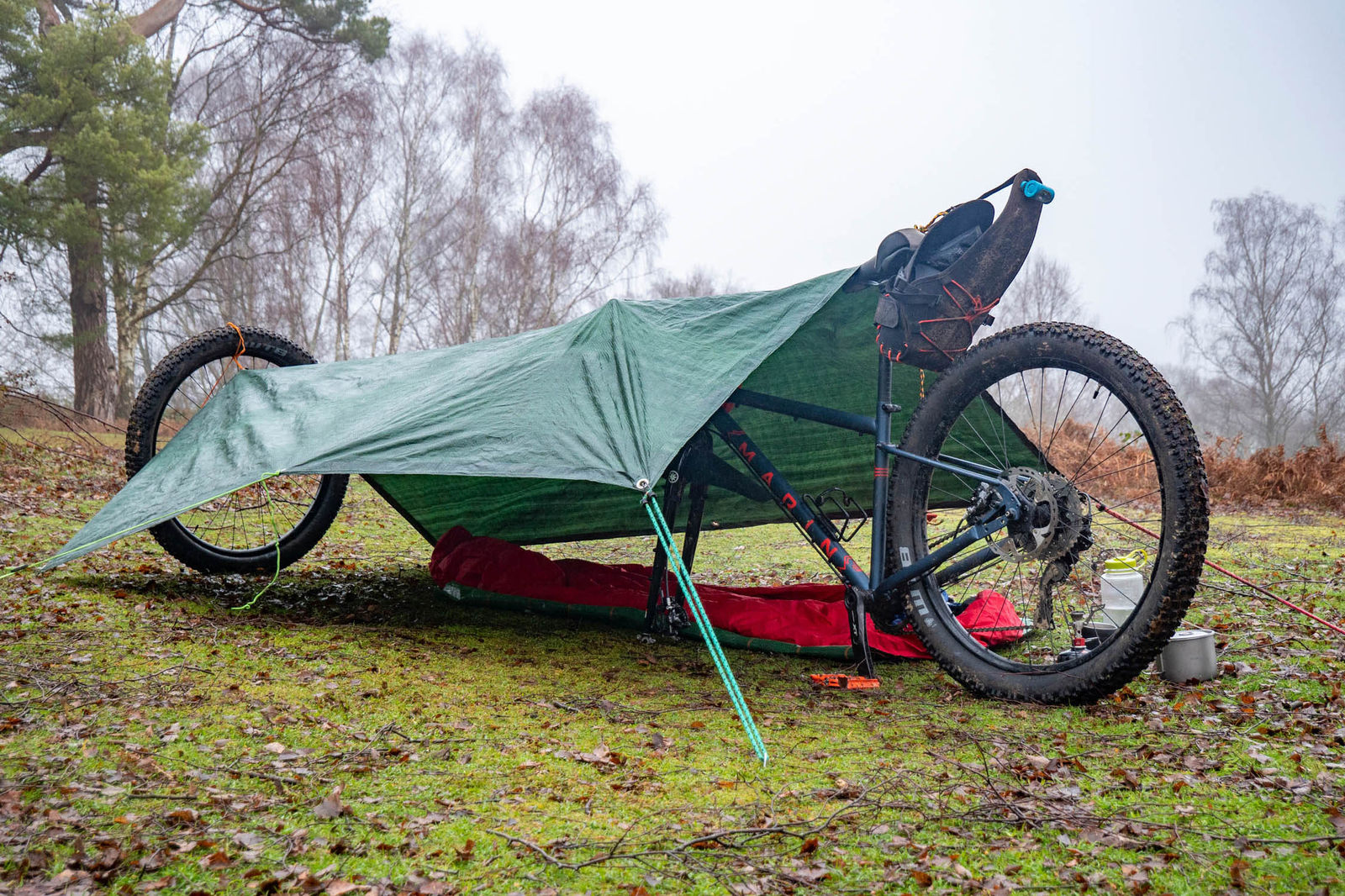
A roof without walls. Tie it to trees or your bike for protection from rain, bat droppings, falling branches and even wind. Psychological comfort too, for minimal weight.
Bivvy
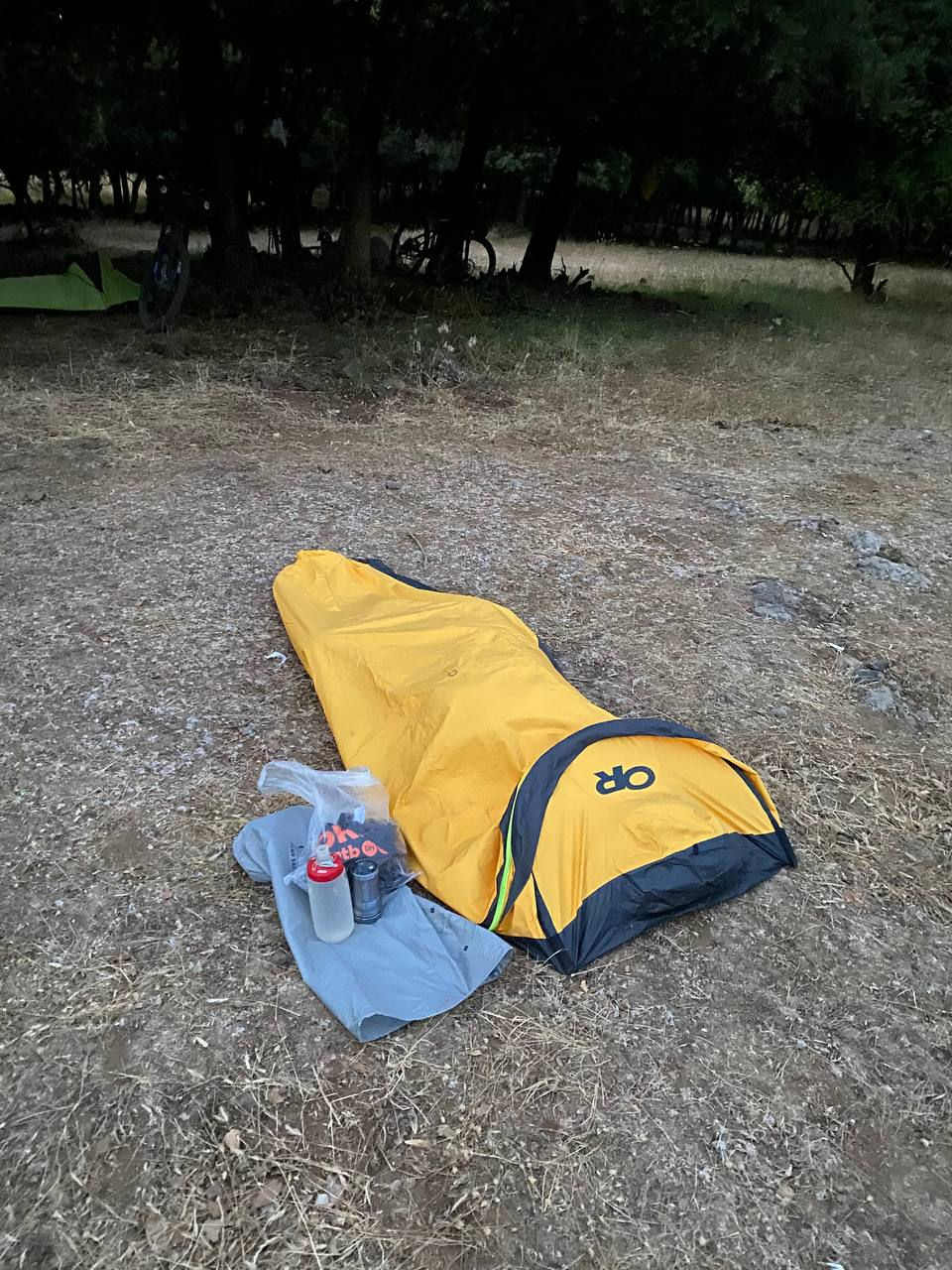
Like a tent, only smaller, more compact and lighter, with no poles since it ties to the bike. No room to move, but great insulation. Slide in and sleep.
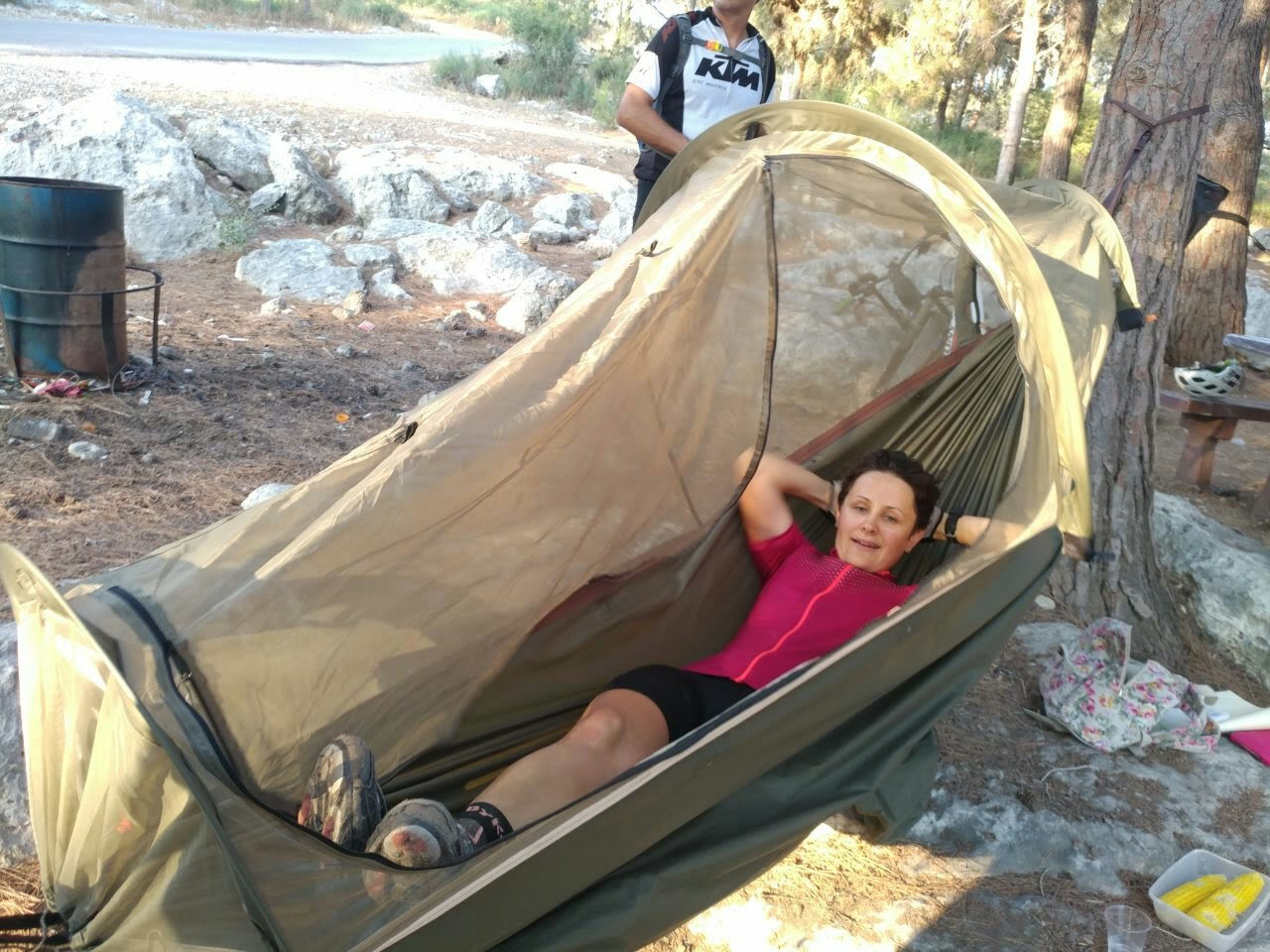
Hammock
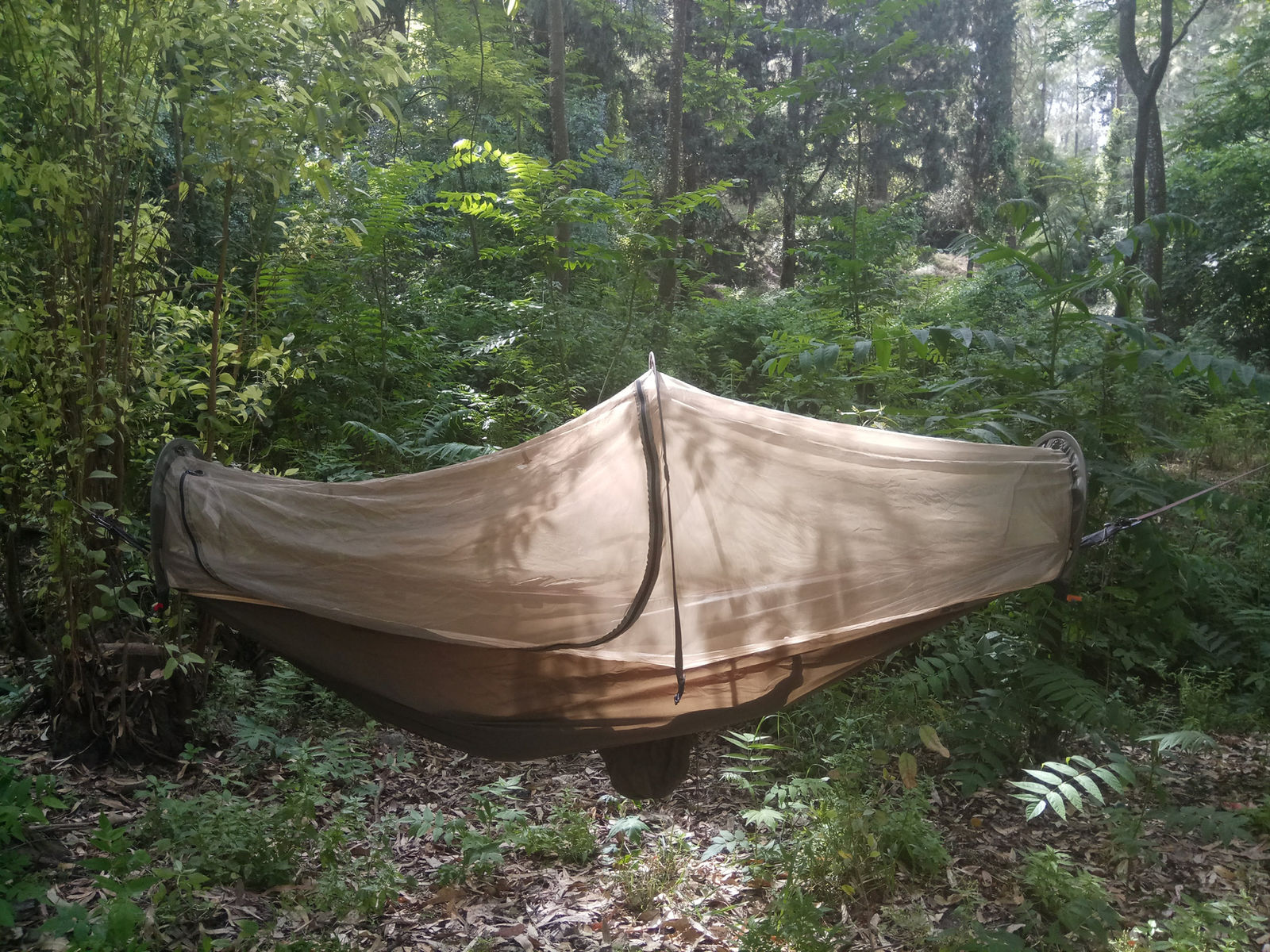
Total freedom: the gentle sway puts you straight to sleep, and there's no need for a pad. But you need a forest with trees at the right spacing. A few too many requirements.
Choosing a bikepacking tent
- 01 Packed length: look for poles that fold to 35–40 cm at most, so the tent fits in the front bag between the hoods.
- 02 Solo or double: a one-person tent saves weight, but a two-person one leaves room for your bags and gear inside.
- 03 Single- or double-wall: single-wall is lighter but prone to condensation inside. Double-wall breathes better and suits humid nights.
- 04 Freestanding or staked: a freestanding tent is easier on rock and sand, where pegs won't hold.
- 05 Tents pitched with a trekking pole, or off the bike itself, save the weight of poles.
Picking your camp spot
- 01 Never sleep in a riverbed or wadi in winter. A flash flood can come from rain far away, even under clear skies.
- 02 Find flat ground and clear stones and thorns before you pitch. It protects your pad too.
- 03 A slightly raised, wind-sheltered spot is warmer and less damp than a valley floor.
- 04 Point the door away from the wind, and tie out the guylines even when it seems unnecessary.
- 05 Arrive before dark. It's much easier to pick a good spot and pitch in daylight.
- 06 Respect the law and nature: use official night campsites where possible, and leave no trace.
Condensation, damp and care
- 01 Condensation comes from your breath on cold nights. Open the vents even when it's cold, and there will be fewer drips by morning.
- 02 Shake it out in the morning. If the tent is wet, spread it out to dry at the lunch stop.
- 03 A thin footprint protects the tent floor from rocks and thorns, and you can cut one from stiff plastic sheeting.
- 04 Dry it fully at home before storing. A tent packed away wet will mould within days.