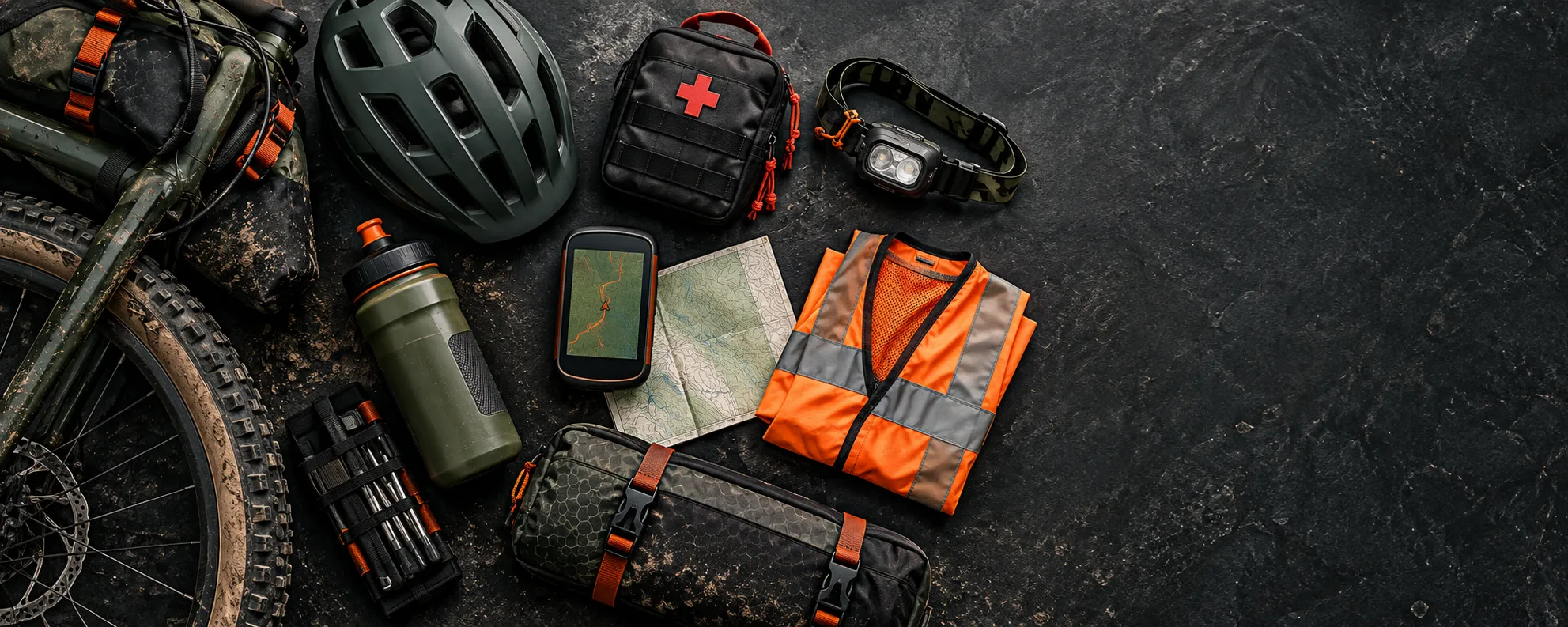
With all the freedom and the feeling of leaving rules behind, it's worth taking in a few key tips that will get you home safely. Some come from hard experience, on the bike and at camp.
In an emergency
If you are really in trouble, do this:
- 01 Call 100 (police).
- 02 Call 101 (Magen David Adom ambulance) and open the MDA app at the same time.
- 03 Need a defibrillator? Check the app for the nearest one.
- 04 Read the CPR guide before you ride.
- 05 Riding where there is little or no reception? Check where emergency Wi‑Fi is available along the route.
CPR guide
Safety while riding
Get off the shoulder
There will always be roads. Keep to the edge, or even go beyond the guardrail. A comfortable path almost always turns up there.
Don't take risks when tired
Tired and just want to arrive? Better to slow down and get there safely than risk it for 5 minutes.
Stay on the line
In remote areas like the desert or the Golan, stay on the route. It's easy to discover the trail is on a parallel hill that's hard to reach (yes, from experience).
Stray dogs
Pepper spray is an option, but just as effective is to stop, walk, and keep the bike between you. Eventually they give up. Shouting helps too.
Wild boars
They're more scared of you. If one crosses the trail, stop for half a minute and continue slowly, because more usually follow right behind.
Music while riding
Podcasts are fun, but it's important to hear what's around you. Turn the volume down on trails and take the earbuds out beside roads.
Need to shop?
Don't leave your bike alone. Ask if you can keep it somewhere safe. Most shopkeepers will understand and try to help.
Keep friends posted
Riding solo? Tell a friend or two about your route each day and send a message when you stop. It's good that someone knows roughly where you are.
Your sixth sense
If something feels off, and it isn't just fatigue, think of a way around it. It's fine to stop, check the map or call a friend.
Don't let this scare you
These tips are here to help you finish healthy, not to put you off. You're touring our own country, and there's almost always a bus, train or friend who can reach you.
Share your live location
Send a friend your live location before you set off: WhatsApp live location, Garmin LiveTrack or Strava Beacon.
Riding on roads
A helmet is required by law outside towns. After dark: a front light, a flashing rear light and a reflective vest.
Safety at camp
Hang your food
Keep food away from where you sleep, ideally in a bag hung from a branch. Animals roam at night, and this protects them too.
Choosing a spot
Avoid sleeping next to rock piles. Look for flat ground and clear the area well to avoid scorpions and snakes.
Stay away from people
The biggest danger to a bikepacker is people, not animals. Avoid sleeping right by roads or problematic villages, and ride a bit further to a quiet grove.
Judgment and fatigue
When you are overtired, fears grow and decisions suffer. A forest that looks forbidding when exhausted can feel perfect when fresh.
Bike theft
Find a remote, safe spot. To ease the worry: use a wheel as a pillow, tie a thin cord to your bag, or rest your feet on a wheel.
Ask the locals
Some wonderful campsites are known only to locals. Check with friends from the area; at worst you find a great rest stop.
Don't arrive exhausted
Arrive with time to eat, drink and find a good spot. Once we arrived wrecked and slept on a fire-ant nest, only to find a gorgeous lawn 20 metres away in the morning.
Dress for the night
After riding your body is still warm and it's tempting to get in the bag lightly dressed. In the middle of the night you'll freeze and have to get out to dress.
Toilet before bed
Not exactly safety, but nothing's worse than waking at 3 a.m., getting out, and coming back to a sleeping bag that has gone cold.
Snakes and scorpions
- 01 In the morning, check your shoes and sleeping bag before putting a hand or foot in.
- 02 Keep the tent zipped, at night and when you step out.
- 03 A bite or sting: don’t cut, don’t suck and don’t use a tourniquet.
- 04 Stay calm, keep the limb still, take off rings and watch, and call 101.
Heat and water: danger number one
Heatstroke doesn't warn you
Headache, nausea, confusion, hot dry skin or no more sweating: stop in the shade at once, pour water over head and neck, sip slowly and call 101.
Plan water generously
In the desert in summer, at least a litre per riding hour plus a reserve litre you don't touch. If the next water point is uncertain, carry more.
Midday in the shade
Between 11:00 and 15:00 in the hot months it’s better to rest. Ride early morning and late afternoon.
Out of water?
Don't keep searching open ground. Go back to the last known water point, or call for help while you still have battery.
Flash floods and extreme weather
A wadi is no place to sleep in winter
Rain falling tens of kilometres away can flood a channel within minutes, even under clear skies.
Never cross a flowing channel
Even shallow-looking water can sweep away a rider and bike. Wait for the flow to drop, even if it takes hours.
Check warnings before you go
Follow the forecast and the flood and closure warnings from the Meteorological Service and the Nature and Parks Authority.
Mud after rain
Before riding after rain, check HaSingletor by Boaz Yoffe (mtb.yoffe.net) for how muddy the trail is likely to be: upload the GPX and get a forecast from the nearest rain station and the soil type.
Mud forecast →Lightning
In a thunderstorm, get off ridges and high ground, move away from lone trees and metal fences, and wait for the storm to pass.
Firing zones, borders and closed areas
Firing zones
Large parts of the Negev and the Golan are military firing zones. Check in advance when crossing is allowed, and respect signs and barriers.
Near the border
Ride only on marked, known trails and keep away from the fence. If security forces arrive, stop and explain what you're doing.
Minefields
The Golan and the Arava still have fenced minefields. Never go past a fence with a red triangle sign.
Nature reserves
Some reserves ban riding or camping. Check the rules and camp only where it’s allowed.
Cattle gates and grids
Many trails cross grazing land. You may pass through a closed gate, but you must close it behind you.
Through it? Close it.
Leave every gate the way you found it, and the last rider in the group makes sure it's closed. A gate left open can let a herd onto the road.
Cattle grids
Slow down before it and cross straight, square to the bars, without braking or turning the bars on it. Wet bars are very slippery: if in doubt, get off and walk the bike across.
Heavy gates, chains and wire
A heavy gate can swing shut all at once: hold it with one hand and the bike with the other, or take turns. A chain, rope or wire across a gap isn't always easy to see, especially downhill and in the dark, so slow down near fences.
Narrow gaps and turnstiles
With wide bags it's easy to get stuck. Slow down and, if needed, take a bag off or pass the bike through separately.
First-aid kit
The basics
Plasters in different sizes, an elastic bandage, sterile pads, medical tape and small scissors.
For grazes and falls
Antiseptic, antibiotic ointment and chafing cream. A small fall on gravel is the most common injury.
Medicines
Painkillers, an antihistamine for stings, anti-diarrhoea tablets and your personal medication, with a spare day’s supply.
Emergency blanket
Weighs a few dozen grams and can keep you warm after an injury or on an unexpectedly cold night.